A balancing machine project does not have to begin with a fixed catalog model. With JAZARION, the route can begin with the rotor, the required measurement architecture and the level of responsibility you want to keep in your own workshop. You can order compatible modules and drawings for local assembly, choose a ready machine, or configure a complete system for production by a qualified manufacturer.
One project, three ways to move forward
The choice is deliberately practical. Different workshops have different equipment, skills, schedules and investment priorities. JAZARION connects three project routes to one controlled technical context:
- Modular assembly: select compatible semi-finished modules and assemble the system in your own professional workshop or production facility.
- Ready catalog machine: choose an existing machine family and define the rotor, tooling, measurement and commissioning options.
- Configured complete system: build a project-specific architecture and send it through engineering review, manufacturing, testing and delivery.
The same project record can connect the configuration, drawings, interfaces, software, calibration documentation, commercial scope and delivery status.
Route 1: assemble a balancing machine as a compatible construction set
The modular route is designed for teams that want to perform part of the fabrication and assembly locally. Instead of buying isolated components and discovering interface conflicts later, the project is structured as a compatible measurement chain.
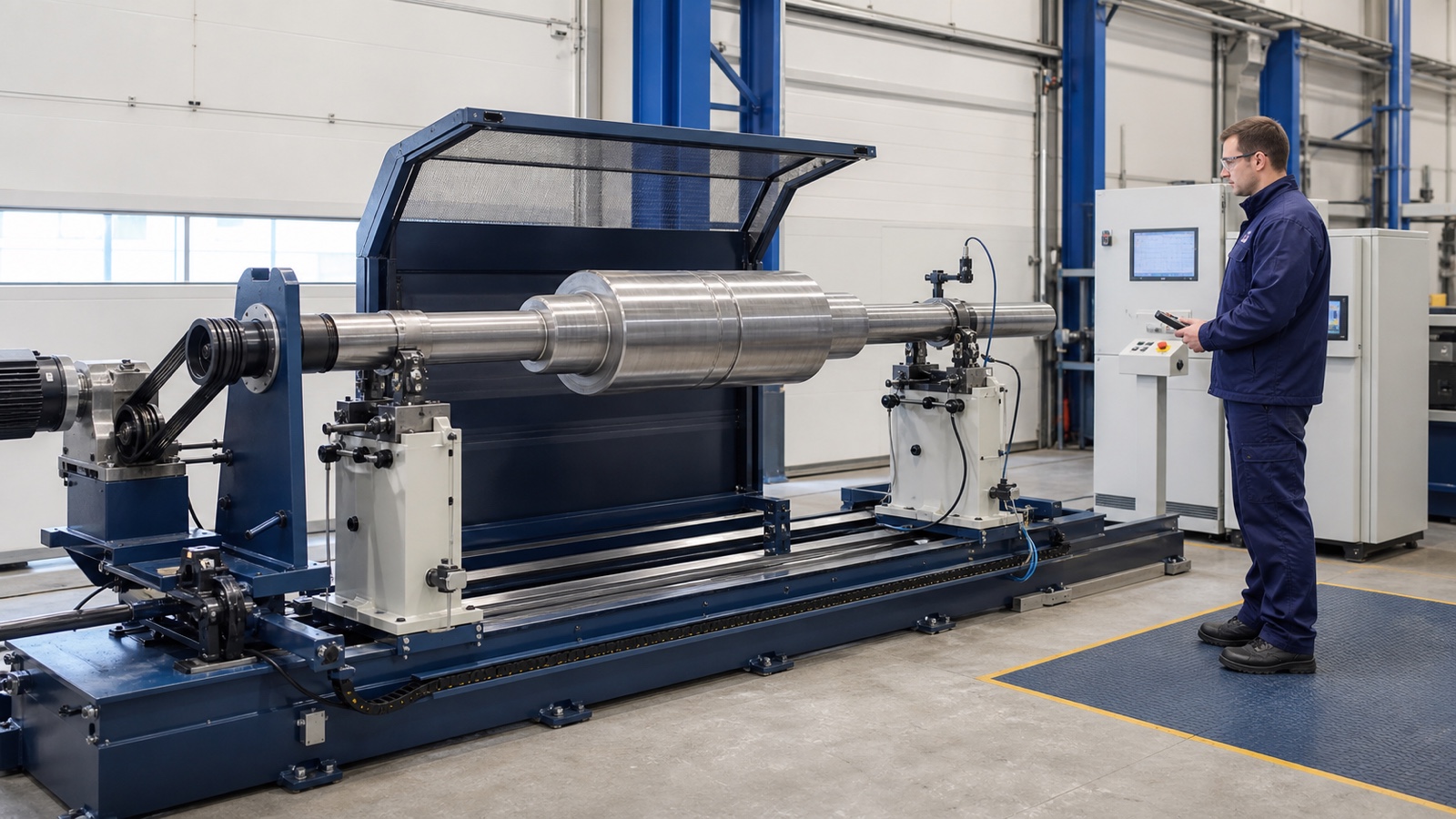
- Bed and rails, supplied complete, sectional, or manufactured locally from controlled drawings.
- Soft-bearing or hard-bearing support modules selected for the rotor mass and speed range.
- Belt, end-drive, universal-joint or self-driven arrangements, depending on the rotor and process.
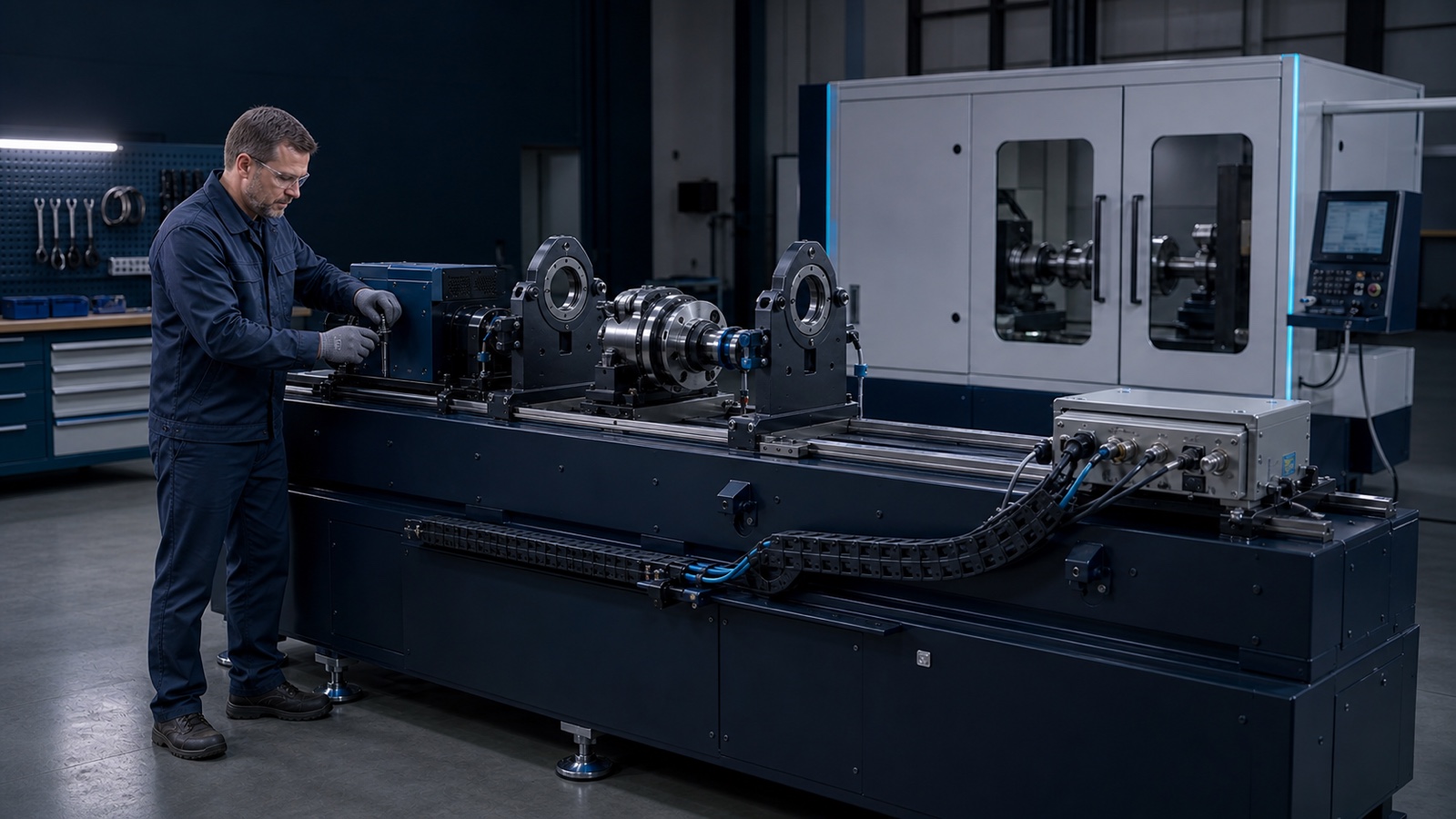
- Vibration or force sensors, together with phase and speed reference.
- Signal acquisition, conditioning, synchronization and protected measurement interfaces.
- Balancing software, project records, correction guidance and reporting.
- Guarding, interlocks and automation options appropriate to the final operating concept.
You may order the physical modules, the controlled drawing package, or a combined scope. This makes it possible to use available machining, welding and assembly capacity while keeping critical interfaces and revisions connected to the project.
A modular system is still industrial rotating equipment. Foundation, structural stiffness, drive selection, electrical protection, guarding, interlocks, calibration and commissioning require competent engineering review. Applicable safety and conformity requirements depend on the machine, use case and destination.
Route 2: choose a ready machine or configure one for manufacturer production
If you want a delivered asset rather than a local build, start from the balancing-machine catalog or the configurator. Define the rotor family, dimensions, mass, operating or balancing speed, number of supports, drive concept, correction method, throughput and required reporting.
The resulting configuration can be reviewed and released to a qualified manufacturing facility. Where the project requires specific certifications, quality systems or acceptance procedures, those requirements must be written into the commercial and technical specification before production. A complete scope may include manufacturing, assembly, factory acceptance testing, calibration records, guarding, documentation, delivery, installation support, commissioning and operator training.
Order the machine, the modules or only the drawings
Not every customer needs the same delivery package. A capable workshop may need only controlled drawings and critical measurement components. Another customer may prefer a complete modular kit. A production plant may need a turnkey machine or an automated balancing and correction cell. The project scope can therefore be built around what you already have and what must be supplied.
Start from anywhere and keep logistics connected to the project
A request can be prepared from any region. The project record keeps the selected configuration, files, revisions and delivery scope together. When logistics is included through JAZARION, shipment milestones and available tracking data can remain connected to the same project. Final routing, customs documentation, insurance, installation support and delivery availability are confirmed for the destination and supplier before order release.
What to prepare before configuration
- Rotor type, dimensions, mass and drawings or 3D data.
- Bearing locations, support conditions and required number of supports.
- Target balancing speed, operating speed and expected unbalance range.
- Required correction method, cycle time and production volume.
- Available utilities, floor or foundation conditions and workshop capabilities.
- Required reports, calibration records, standards and destination constraints.
The choice stays with you
Build locally, order a modular kit, select a ready machine or launch a custom system through a manufacturing partner. JAZARION turns that choice into a connected engineering and delivery route so the machine, its drawings, measurement chain and project history do not become separate, disconnected purchases.